Texas Wrongful Death Lawyers
Relentless legal advocacy for families in McAllen, San Juan, and across Texas.
Free Case Evaluation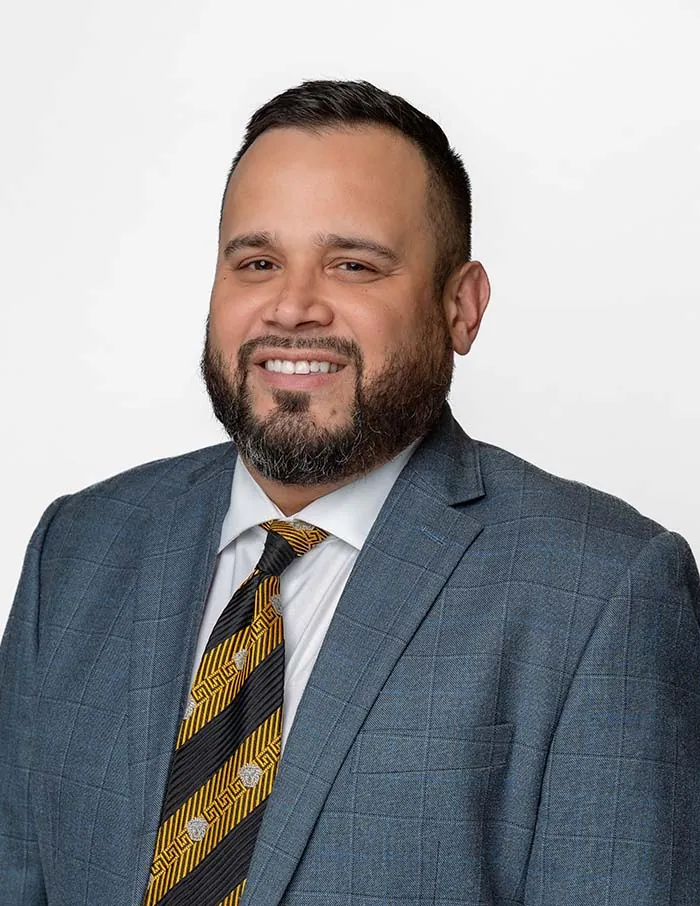
If you lost a loved one due to another party’s negligence, Chris Sanchez — The Relentless Lawyer — fights to hold them accountable and secure the compensation your family deserves. Call (956) 686-4357 for a free consultation.
What Is a Wrongful Death Claim in Texas?
A wrongful death claim is a civil lawsuit filed when someone dies as a result of another person’s negligence, recklessness, or intentional act. Under the Texas Wrongful Death Act (Tex. Civ. Prac. & Rem. Code § 71.002), certain surviving family members have the right to seek financial compensation for their losses.
While no amount of money can replace your loved one, a wrongful death lawsuit provides two things: financial stability for your family and accountability for the negligent party. Common wrongful death cases handled by Chris Sanchez include car and truck accidents, 18-wheeler crashes, workplace accidents, medical malpractice, premises liability, and defective products.
Who Can File a Wrongful Death Lawsuit in Texas?
Under Tex. Civ. Prac. & Rem. Code § 71.004, a wrongful death claim may be brought by the deceased person’s:
- ✓ Surviving spouse
- ✓ Children (including legally adopted children)
- ✓ Parents
If none of these individuals file within three months of the death, the executor or administrator of the estate may file on behalf of the estate under § 71.004(b).
Statute of Limitations: 2 Years to File in Texas
Damages Recoverable in a Texas Wrongful Death Claim
Texas law allows surviving family members to recover both economic and non-economic damages. Chris Sanchez works with financial experts and medical professionals to calculate the full scope of your losses.
In cases involving gross negligence or intentional misconduct, exemplary (punitive) damages may also be awarded under Tex. Civ. Prac. & Rem. Code § 41.003.
Why Choose Chris Sanchez as Your Texas Wrongful Death Attorney?
Chris Sanchez — The Relentless Lawyer — is a McAllen-based personal injury attorney who represents families across Texas on a contingency fee basis: you pay nothing unless we win your case. He brings the same determination to wrongful death cases that has earned him a reputation throughout the Rio Grande Valley and statewide.
- Bilingual representation (English & Spanish)
- Offices in McAllen, San Antonio, and Houston
- No upfront fees — we only get paid when you do
- Direct access to Chris, not a paralegal
Frequently Asked Questions — Texas Wrongful Death Law
Under Texas Civil Practice & Remedies Code § 16.003, families have two years from the date of death to file a wrongful death lawsuit. Missing this deadline permanently ends the right to sue. Contact a Texas wrongful death attorney immediately after losing a loved one to preserve your legal options.
Who is eligible to file a wrongful death lawsuit in Texas?
Under Tex. Civ. Prac. & Rem. Code § 71.004, only the surviving spouse, children, or parents of the deceased may bring a wrongful death claim. If none of them file within three months of the death, the estate executor may file on their behalf.
How much is a wrongful death case worth in Texas?
Value depends on the deceased’s age, income, life expectancy, strength of the negligence case, and available insurance. Economic damages alone can reach hundreds of thousands of dollars. Non-economic damages — including mental anguish and loss of companionship — are uncapped in Texas wrongful death cases.
Can I file a wrongful death claim if the deceased had no income?
Yes. Texas wrongful death law recognizes non-economic damages — including loss of companionship, guidance, and love — which do not depend on the deceased’s income. Parents who lose a child, or children who lose a stay-at-home parent, can still recover substantial compensation.
What if the deceased was partially at fault for their death?
Texas follows a modified comparative fault rule under Tex. Civ. Prac. & Rem. Code § 33.001. If the deceased was less than 51% at fault, the family can still recover damages reduced by their fault percentage. At 51% or more at fault, no recovery is allowed.
What is a survival claim versus a wrongful death claim in Texas?
A survival claim under Tex. Civ. Prac. & Rem. Code § 71.021 lets the estate recover damages the deceased suffered before death — such as pain and suffering and lost wages. A wrongful death claim compensates surviving family members for their own losses. Both are often filed together in Texas.
How long does a wrongful death lawsuit take in Texas?
Most Texas wrongful death cases settle within 12 to 24 months. Cases involving disputed liability, multiple defendants such as trucking companies, or significant insurance coverage may take longer. Cases going to trial in Hidalgo County courts typically take 2 to 3 years from filing.
Do I need a lawyer for a wrongful death case in Texas?
Yes. Wrongful death cases involve complex liability investigations, accident reconstruction experts, medical specialists, and aggressive insurance defense teams. Chris Sanchez handles wrongful death cases on contingency — you pay nothing unless we win. Call (956) 686-4357 for a free consultation.
From McAllen, San Antonio, and Houston, Chris Sanchez provides local, compassionate representation with the resources of a statewide firm, ready to fight for families across Texas.
Proving a wrongful death claim in Texas requires establishing four key elements: the death of a person, that the death was caused by another’s negligence or intent, that the claimants are statutory beneficiaries, and that financial damages resulted from the death. Chris Sanchez conducts deep investigations, subpoenaing phone records, black box data, and surveillance footage to prove liability beyond a doubt.
- 18-Wheeler Crashes: Violations of FMCSA safety hours or improper maintenance on I-2 and I-69C.
- Drunk Driving: Holding both the driver and potentially the establishment accountable under Texas Dram Shop laws.
- Workplace Explosions: Negligence in industrial zones and oil refineries in South Texas.
Evidence in Texas wrongful death cases disappears quickly. Skid marks fade, logbooks are “lost,” and witnesses move away. When you hire The Relentless Lawyer, our team immediately issues spoliation letters to preserve all evidence, ensuring the truth is protected for your family’s future.
Winning Your Texas Wrongful Death Case
Proving a wrongful death claim in Texas requires establishing four key elements: the death of a person, that the death was caused by another’s negligence or intent, that the claimants are statutory beneficiaries, and that financial damages resulted from the death. Chris Sanchez conducts deep investigations to prove liability beyond a doubt.
Common Causes of Wrongful Death
- 18-Wheeler Crashes: Violations of FMCSA safety hours or improper maintenance.
- Drunk Driving: Holding both the driver and the establishment accountable under Dram Shop laws.
- Workplace Explosions: Industrial and refinery negligence in South Texas.
Justice for Your Family Starts Now
Chris Sanchez is ready to fight for you. No fee unless we win. Offices in McAllen and San Juan.
Call Chris Now: (956) 616-2020Texas Wrongful Death Statute — § 71.002 in Detail
The Texas Wrongful Death Act, codified at Texas Civil Practice and Remedies Code § 71.001 through § 71.012, gives surviving family members the right to sue when negligence kills their loved one. The statute identifies three categories of beneficiaries who can recover: the surviving spouse, the surviving children (including adult children and adopted children), and the parents of the decedent. Siblings cannot recover under this statute. Common-law spouses can recover if the relationship qualifies under Texas family law standards.
Texas wrongful death damages compensate the surviving family for what they lost — not what the decedent suffered. Recoverable damages include:
- Loss of financial support — Income the decedent would have earned over the remainder of their working life
- Loss of services — Household contributions: childcare, home maintenance, cooking, eldercare
- Loss of companionship and society — The intangible value of the relationship
- Mental anguish — Past and future emotional distress of the surviving family members
- Loss of inheritance — Wealth the decedent would have accumulated and left to heirs
- Funeral and burial expenses
- Exemplary (punitive) damages — Available under § 41.003 in cases of gross negligence, willful misconduct, or malice
Texas Survival Statute — § 71.021 (Separate Claim)
In addition to the wrongful death claim, Texas allows a survival action on behalf of the decedent’s estate under § 71.021. This separate claim recovers what the decedent would have recovered had they lived: medical bills incurred between injury and death, conscious pain and suffering between injury and death, lost wages between injury and death, and property damage. The survival claim is filed by the executor or administrator of the estate; the wrongful death claim is filed by the surviving family.
Coordinating the two claims is critical. A skilled attorney files both, allocates damages between them properly, and prevents defense lawyers from playing them against each other. Improperly handled, a defendant can argue duplicate recovery — and reduce the family’s overall award.
Common Causes of Wrongful Death in Texas We Handle
- Car accidents — Texas leads the nation in motor vehicle fatalities. Drunk drivers, distracted drivers, speeding, head-on collisions.
- 18-wheeler / commercial truck crashes — Catastrophic mass disparity, especially on I-2, US-83, US-281, and the Houston Ship Channel corridor
- Motorcycle accidents — Rider fatalities are 28× more likely than for passenger car occupants per mile traveled
- Oilfield and industrial accidents — Permian Basin, Eagle Ford, Gulf Coast refinery deaths
- Construction site fatalities — Falls, struck-by accidents, electrocution, trench collapses
- Medical malpractice — Misdiagnosis, surgical errors, anesthesia mistakes
- Defective products — Vehicle component failures, dangerous consumer products, defective machinery
- Premises liability fatalities — Inadequate security, slip-and-fall in extreme cases, structural failures
- Drowning in pools or open water — Inadequate supervision, missing barriers, defective drains
- Drunk driving deaths — Including dram shop liability against bars and restaurants under Tex. Alcoholic Beverage Code § 2.02
Calculating Wrongful Death Damages — The Real Numbers
Texas wrongful death cases vary widely in value, but several categories of damages drive the calculation:
Loss of Earnings
Calculated by economists. Take the decedent’s annual income, multiply by remaining work-life expectancy (typically retirement age minus current age), then adjust for inflation, taxes, and personal consumption. A 35-year-old with $80,000 annual income and 30 years of work life remaining could see $1.5M-$2.5M in this category alone (with proper economic projections).
Loss of Companionship and Mental Anguish
Highly variable. Texas juries can award substantial damages for the loss of a parent, spouse, or child. There is no formula — these are jury determinations based on the relationships and circumstances. Awards of $250,000 to $5M+ per family member are possible in catastrophic cases.
Punitive Damages (§ 41.003)
Available when the death was caused by gross negligence, malice, or fraud. Common scenarios: drunk driving deaths, hit-and-run, intentional misconduct, reckless commercial driving with FMCSA violations. Punitive damages are capped under § 41.008 at the greater of two times economic damages plus equal non-economic damages up to $750,000, or $200,000.
Texas Statute of Limitations for Wrongful Death
Two years from the date of death under Tex. Civ. Prac. & Rem. Code § 16.003(b). This is a strict deadline. Government entity claims have shorter notice requirements (often 6 months under the Texas Tort Claims Act). Medical malpractice wrongful death claims have a 2-year statute, but the discovery rule may apply in some cases.
Beneficiaries must agree on counsel and strategy. If the surviving family disputes who should sue or how to allocate recovery, the case becomes more complex. An experienced wrongful death attorney coordinates the family’s interests and resolves internal disputes before they damage the case.
Who Can Sue and Who Receives Recovery
Under § 71.004, the wrongful death action is “for the exclusive benefit” of the surviving spouse, children, and parents. Distribution is determined either by agreement among beneficiaries or by court order. Common allocation patterns:
- Surviving spouse and children — Spouse and children typically each receive a roughly equal share, with the spouse often getting somewhat more for loss of consortium
- Surviving parents (no spouse or children) — Parents share equally
- Adult children of the decedent — Adult children are still beneficiaries; their loss is real and recoverable
- Estranged family members — May still recover, but jury allocations may be smaller
The estate (separate from the family) recovers under the survival action. Estate recovery passes through the will or, if there is no will, through Texas intestate succession.
Common Defenses to Wrongful Death and How We Defeat Them
- Comparative fault — Defendants argue the decedent was partially at fault (and reduce recovery proportionately, or eliminate it under the 51% bar). We defeat this with accident reconstruction and physical evidence.
- Pre-existing conditions — “He was going to die anyway.” Defeated by medical experts establishing the actual cause of death.
- Failure to mitigate — Did the decedent fail to wear a seatbelt, refuse medical treatment, etc.
- Sovereign immunity — In claims against government entities. Specific exceptions allow many claims; technical compliance with Texas Tort Claims Act required.
- Workers’ compensation exclusivity — Limits recovery against the direct employer in most workplace deaths. Third-party claims usually still available.
- Contractual liability waivers — Often unenforceable when applied to gross negligence or statutory violations.
Why Wrongful Death Cases Need an Experienced Attorney
Wrongful death cases are simultaneously the most emotionally devastating and the most legally complex personal injury matters. They require:
- Coordinating family members who may disagree about strategy
- Filing both wrongful death and survival actions properly
- Identifying ALL liable parties (driver, employer, manufacturer, premises owner, etc.)
- Working with economists to project decades of lost earnings
- Working with grief counselors and mental health experts to document mental anguish
- Investigating immediately before evidence disappears (electronic logs, surveillance footage, vehicle data)
- Negotiating from a position of strength with insurance carriers who know wrongful death verdicts can reach $10M+
Frequently Asked Questions — Texas Wrongful Death
Who can sue for wrongful death in Texas?
Only the surviving spouse, children (including adult and adopted children), and parents of the decedent can bring a Texas wrongful death claim under § 71.004. Siblings cannot. The executor or administrator of the estate brings the separate survival action under § 71.021.
How long do I have to file a wrongful death lawsuit in Texas?
Two years from the date of death under § 16.003(b). Government entity claims (Texas Tort Claims Act) require notice within six months in most cases. Medical malpractice claims have specific notice and procedural rules. Time runs from the date of death — not the date of injury, if those differ.
How much is a Texas wrongful death case worth?
Highly variable. Cases involving young, high-earning decedents with multiple dependents regularly settle for $1M+ or reach jury verdicts of $5M-$15M+. Cases involving elderly decedents or those without dependents tend to settle in the $250,000-$1M range. Drunk driving and gross negligence cases trigger punitive damages, substantially increasing recovery.
Can I file a wrongful death claim if my loved one died in a workplace accident?
Yes — but with limitations. If the employer is a Texas workers’ compensation subscriber, the workers’ comp death benefits are typically the exclusive remedy against the direct employer. However, third-party claims (against equipment manufacturers, other contractors, premises owners) are usually still available and often produce significantly larger recoveries.
Are punitive damages available in Texas wrongful death cases?
Yes. Punitive damages under Tex. Civ. Prac. & Rem. Code § 41.003 are available when the death was caused by gross negligence, malice, or fraud. Common scenarios: drunk driving, intentional misconduct, hit-and-run, reckless driving with FMCSA violations. The punitive cap is the greater of two times economic damages plus non-economic damages up to $750,000, or $200,000.
Can multiple family members file separate wrongful death lawsuits?
No. Texas law requires the wrongful death claim to be brought as a single action for the benefit of all eligible beneficiaries. If beneficiaries cannot agree on counsel or strategy, the court can resolve disputes — but a unified lawsuit is required. The Law Office of Chris Sanchez handles family coordination as part of representing wrongful death cases.
What if the decedent had no surviving spouse, children, or parents?
Then there is no wrongful death claim under Texas law — § 71.004 limits beneficiaries to spouse, children, and parents. However, the estate’s survival action under § 71.021 still applies, and recovery passes to heirs under the decedent’s will or Texas intestate succession.
Will I have to testify in court if I file a wrongful death lawsuit?
Most cases settle without trial. About 95% of Texas wrongful death cases resolve through settlement after discovery and mediation. If the case does go to trial, family members typically testify briefly about their relationship with the decedent and their emotional losses. An experienced attorney prepares family members thoroughly.
Can Chris Sanchez handle wrongful death cases throughout Texas?
Yes. The Law Office of Chris Sanchez handles wrongful death cases statewide, including the Rio Grande Valley, Houston, San Antonio, Austin, Corpus Christi, the Permian Basin, and Eagle Ford Shale. Free, confidential consultations available 24/7 in English and Spanish. Call (956) 686-4357.
City-specific wrongful-death resources. For McAllen + Hidalgo County see Wrongful Death Lawyer McAllen; for Cameron County see Wrongful Death Lawyer Brownsville; for Starr County see Wrongful Death Lawyer Rio Grande City.
Wrongful death cases require an attorney with proven results and real client trust. Read our full case for why Chris Sanchez ranks among the best personal injury attorneys in McAllen and the Rio Grande Valley.